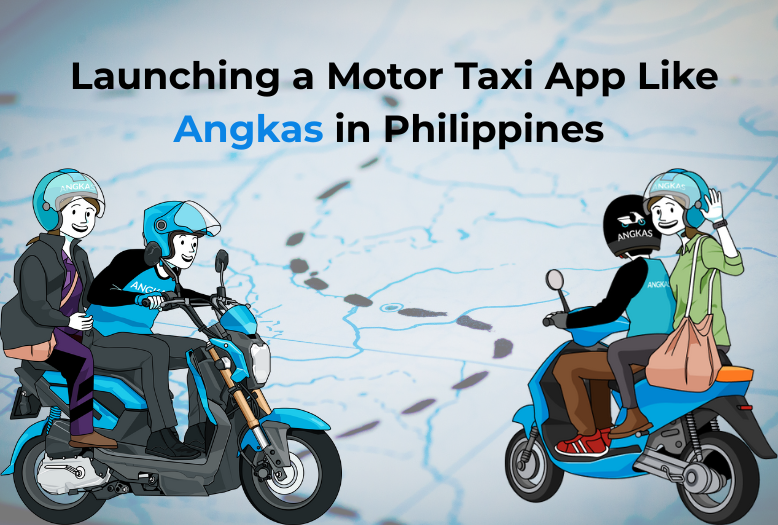
In recent years, the Philippines has witnessed a major shift in the way people move around cities. With growing urban traffic, long commute hours, and rising transportation demands, motor taxi apps like Angkas have become the most practical and time saving solution for daily commuters.
Apps like Angkas have completely transformed the transportation landscape. They provide affordable, fast, and reliable rides that help people reach their destinations even through heavy traffic. For entrepreneurs, this trend also opens an exciting business opportunity to build their own motor taxi app and tap into the growing ride hailing market in the Philippines. In this guide, we’ll explore everything you need to know to build a motor taxi app like Angkas, including its core features, development process, cost structure, technologies used, and how to get started with your own platform in the Philippines.
What Is Angkas App?
Angkas is a popular bike taxi app in the Philippines that connects passengers with trained motorcycle riders for convenient and affordable transportation. It works like a ride hailing app but focuses solely on motorbikes.
Founded in 2016, Angkas quickly gained popularity in busy cities like Manila, Cebu, and Davao. The app’s success comes from its ability to offer faster travel times, lower fares, and reliable service, especially in traffic prone areas.
Key Highlights of Angkas:
- Over 20,000 trained and verified riders
- Affordable rides for daily commuters
- Real time GPS tracking and safety features
- Quick payments and digital receipts
Why Are Motor Taxi Apps Booming in the Philippines?
Motor taxi apps are growing fast because they match the lifestyle and needs of urban Filipino commuters. Here are a few reasons behind their popularity:
- Traffic Congestion: Metro cities like Manila are known for heavy traffic jams. Motorbikes can navigate narrow lanes and bypass congestion, saving passengers a lot of time.
- Affordable Rides: Compared to car based ride hailing services, motorcycle rides are cheaper. This makes them accessible to a large number of commuters.
- Ease of Booking: With just a few taps, passengers can book rides instantly through the mobile app. The digital interface also allows cashless transactions and instant fare estimates.
- Growing Smartphone Usage: The Philippines has a high smartphone adoption rate and good mobile internet connectivity, which supports app based transportation services.
- Employment Opportunities: Thousands of bike owners have found stable income through motor taxi apps. This contributes to local economic growth.
Key Features of a Motor Taxi App Like Angkas

To create an app like Angkas, you need to build three main components the Passenger App, the Rider App, and the Admin Panel. Each has specific features that ensure smooth operation and user satisfaction.
Passenger App Features
- User Registration: Quick signup via phone number, email, or social media.
- Ride Booking: Option to enter pickup and drop locations easily.
- Fare Estimation: Displays an approximate fare before booking.
- Live GPS Tracking: Real time location tracking of the rider.
- Multiple Payment Options: Cash, card, or e-wallet payments.
- Ride History: Records of previous trips and payments.
- Ratings and Reviews: Option to rate riders and share feedback.
- Notifications: Real time alerts for booking confirmation and rider arrival.
Rider App Features
- Easy Registration & Verification: Driver documents and license uploads.
- Ride Requests: Option to accept or reject ride requests.
- Navigation: Built in maps for route optimization.
- Earnings Dashboard: Daily and weekly income summaries.
- Availability Toggle: Riders can go online or offline anytime.
- Safety Features: SOS button and customer support integration.
Admin Panel Features
- User & Driver Management: Manage profiles, documents, and accounts.
- Trip Management: Track all ongoing and completed rides.
- Payment Management: Oversee payments, commissions, and invoices.
- Analytics Dashboard: Monitor app performance and reports.
- Promotions & Discounts: Manage coupon codes and referral rewards.
A well designed app ensures every feature works smoothly, helping you build trust and retain customers.
How a Motor Taxi App Works?
The working model of a motor taxi app is simple and efficient. Here’s how it typically works:
- User Opens the App: The passenger logs into the app and enters the pickup and destination points.
- Ride Request Sent: The app automatically sends the request to nearby available riders.
- Rider Accepts the Request: The rider gets the details and starts heading to the pickup location.
- Ride Begins: The passenger meets the rider, and the trip starts.
- Real Time Tracking: Both parties can track the trip in real time.
- Payment: Once the ride is complete, payment is made through cash or digital methods.
- Rating and Feedback: Both the rider and passenger rate each other for service quality.
This smooth workflow is what makes motor taxi apps so convenient and reliable.
Step-by-Step Process to Create a Motor Taxi App Like Angkas

Motor taxi apps are growing fast, especially in countries like the Philippines. Apps like Angkas allow people to move quickly and affordably, avoiding traffic jams. If you want to build a motor taxi app like Angkas, follow this detailed step-by-step guide.
Step 1: Study the Market
Before developing an app, you need to understand your market. Market research helps you identify users, competitors, and demand.
- Understand your users: Know who will ride your motor taxis. Are they office workers, students, or tourists? Different users may have different needs.
- Study competitors: Look at apps like Angkas, JoyRide, and Move It. Analyze their pricing, features, promotions, and customer feedback.
- Local rules and regulations: Check the permits, driver licenses, insurance requirements, and safety standards for motor taxis in your city.
- Pricing strategy: Decide how you will charge per kilometer, per minute, or flat rate. Competitive pricing attracts more users.
- Research demand hotspots: Find areas with high traffic, business centers, or schools where users are more likely to book rides.
Tip: Surveys and interviews with riders and drivers give real insights into what people want. This ensures your app solves actual problems.
Step 2: Decide the Features
The features of your app are very important. A good motor taxi app has three parts: Rider App, Driver App, and Admin Panel.
Rider App Features:
- Easy signup/login via phone, email, or social media.
- Book rides immediately or schedule for later.
- Live GPS tracking for the driver’s location.
- Fare estimate before booking.
- Multiple payment options: cash, card, or e-wallets.
- Ratings and feedback for drivers.
- Ride history to check past trips.
- SOS button for emergencies.
Driver App Features:
- Register and upload documents for verification.
- Accept or reject ride requests.
- GPS navigation with fastest route options.
- Track earnings and payout history.
- Notifications for new ride requests or updates.
- Driver performance ratings and tips from riders.
- Option to set work hours or go offline.
Admin Panel Features:
- Manage users, drivers, rides, and payments.
- View reports on revenue, rides, and user behavior.
- Handle complaints and disputes.
- Send promotions or updates to users.
- Monitor app security and performance.
Tip: Adding advanced features like ride sharing, subscription plans, or promo codes can increase engagement and revenue.
Step 3: Choose Technology
Technology affects app speed, reliability, and security. Choosing the right stack is key.
- Mobile App Development: Use Flutter or React Native to build for Android and iOS simultaneously. Or use Swift (iOS) and Kotlin (Android) for native apps.
- Backend: Node.js, Python (Django), or Ruby on Rails for handling user data, rides, and payments.
- Database: MySQL, PostgreSQL, or MongoDB to store user accounts, rides, and transactions.
- Maps & Navigation: Google Maps API or Mapbox for accurate route tracking and ETAs.
- Payment Gateway: Stripe, PayPal, or local wallets like GCash for secure payments.
Tip: Ensure your app is scalable, so it can handle more users as your business grows. Use cloud hosting for better performance.
Step 4: Design the App
Good UI/UX design makes your app easy to use and attractive.
- Keep navigation simple and intuitive for both riders and drivers.
- Use readable fonts, bright colors, and clear icons.
- Show accurate pickup and drop off points on the map.
- Let users save favorite locations, preferred drivers, or past rides.
- Include feedback options and emergency features for safety.
Tip: Test your design with real users to ensure the app is easy and enjoyable to use. A simple and attractive design keeps users coming back.
Step 5: Develop the App
Development involves creating the backend, mobile apps, and admin panel.
- Backend Development: Set up servers, databases, and APIs. Integrate payment gateways, maps, and notifications.
- Rider & Driver Apps: Build the mobile apps and connect them to the backend for real time tracking and ride updates.
- Admin Panel: Build a dashboard to manage users, rides, payments, and promotions.
Tip: Use Agile development to build in small milestones and test continuously. This reduces errors and ensures features work as intended.
Step 6: Add APIs
APIs make your app functional and efficient.
- Payment API: For safe and fast transactions.
- Maps & GPS API: For route planning, live tracking, and ETAs.
- Push Notification API: Notify riders and drivers about rides, cancellations, or promotions.
- SMS & Email API: Send verification codes, booking confirmations, or updates.
Tip: Use reliable APIs to avoid downtime or errors, especially for GPS and payments.
Step 7: Test the App
Testing ensures your app works smoothly before launch.
- Functional Testing: Check if all features work correctly.
- Performance Testing: The App should load fast and handle many users at once.
- Security Testing: Protect user data and payment information.
- User Testing: Let a small group try the app and provide feedback.
Tip: Fix all bugs, optimize speed, and ensure smooth navigation. Testing improves user trust and reduces negative reviews.
Step 8: Launch and Marketing
After testing, launch your app on Google Play and the App Store. Promote it to attract users:
- Use social media ads on Facebook, Instagram, and TikTok.
- Run referral programs to encourage users to invite friends.
- Partner with local businesses or events for promotions.
- Offer discounts or free rides for first time users.
- Use email or SMS campaigns to reach potential users.
Tip: Keep monitoring your campaigns and adjust strategies based on performance.
Step 9: Improve Continuously
Your work doesn’t end after launch. Keep improving your app regularly:
- Collect feedback from riders and drivers.
- Monitor app analytics to understand usage patterns and revenue trends.
- Update features, fix bugs, and improve speed regularly.
- Introduce new features like loyalty points, scheduled rides, or in app chat.
Tip: Regular updates keep your users happy and loyal, and help you stay ahead of competitors.
Step 10: Safety and Legal Compliance
Safety is critical for motor taxi apps.
- Verify drivers’ licenses, identity, and documents.
- Provide insurance coverage for riders and drivers.
- Train drivers on traffic rules and safe driving.
- Monitor driver behavior and remove unsafe drivers.
- Add an emergency SOS button in the app for rider safety.
Tip: Safety builds trust and encourages more users to choose your app.
Technology Stack for Developing a Motor Taxi App
Developing a motor taxi app like Angkas requires the right technology for smooth performance, scalability, and security. Below is a clear breakdown:
1. Frontend (Mobile App and User Interface)
The frontend is what riders and drivers interact with. It includes all screens, buttons, maps, and animations.
Rider & Driver Apps:
- Flutter – Cross platform, builds apps for both Android and iOS
- React Native – Another cross platform option for fast development
- Swift – Native iOS app development
- Kotlin – Native Android app development
Admin Panel (Web Dashboard):
- React.js – Fast and flexible for web interfaces
- Angular – A Structured framework for large applications
- Vue.js – Lightweight and easy to maintain
Key Frontend Features:
- Ride booking interface
- Real time map tracking
- Payment interface
- Ratings & feedback
- Notifications
2. Backend (Server & Logic)
The backend processes all data, manages users and rides, and handles communication between the app and the database.
Backend Technologies:
- Node.js – Lightweight, supports real time updates
- Python (Django / Flask) – Secure and easy to maintain
- Ruby on Rails – Rapid development and scalable
Key Backend Features:
- Manage ride requests and assignments
- Handle driver and rider data
- Process payments securely
- Manage push notifications and messages
- Generate reports for admins
3. Database
Databases store all essential data like users, rides, payments, and location history.
- SQL Databases: MySQL, PostgreSQL – Great for structured data like payments and profiles
- NoSQL Databases: MongoDB, Firebase – Good for real time location data and fast updates
Tip: Many apps use both SQL and NoSQL to handle structured and real time data efficiently.
4. Maps and GPS
Motor taxi apps need accurate navigation and live tracking.
- Google Maps API – For routing, distance calculation, and ETA
- Mapbox – Customizable maps and navigation
- OpenStreetMap – Open source alternative
Key Features:
- Real time driver location
- Pickup and drop off navigation
- Traffic based route optimization
5. Payment Gateway
Secure payments are essential for a motor taxi app.
- Stripe – Supports multiple payment methods
- PayPal – Popular and trusted globally
- Local wallets – For region specific apps like GCash or GrabPay
Key Features:
- In-app payments
- Payment history
- Refunds and cancellation handling
6. Push Notifications & Messaging
Push notifications keep users informed and engaged.
- Firebase Cloud Messaging (FCM) – Free and reliable for both Android & iOS
- OneSignal – Easy integration for notifications
- Twilio – For SMS alerts
Use Cases:
- Ride requests and confirmations
- Driver arrivals and cancellations
- Promotions and alerts
7. Hosting & Cloud Services
Your app needs reliable servers for smooth operations.
- Amazon Web Services (AWS) – Scalable and secure
- Google Cloud Platform (GCP) – Reliable cloud hosting
- Microsoft Azure – Enterprise grade hosting
Tip: Cloud hosting helps with auto scaling, so your app can handle peak traffic without crashes.
8. Security
Security protects users’ data and payments.
- SSL/TLS Encryption – Encrypts all app server communication
- OAuth 2.0 – Secure login and authentication
- Data Encryption – Protect sensitive data like passwords and payment details
- Two Factor Authentication (2FA) – Extra security for user accounts
Summary Table
| Component | Technology / Tools | Purpose |
|---|---|---|
| Frontend (Rider/Driver App) | Flutter, React Native, Swift, Kotlin | Mobile app UI & interaction |
| Frontend (Admin Panel) | React.js, Angular, Vue.js | Web dashboard for admin control |
| Backend | Node.js, Python (Django/Flask), Ruby on Rails | Server, logic, APIs, ride management |
| Database | MySQL, PostgreSQL, MongoDB, Firebase | Store users, rides, payments, and locations |
| Maps & GPS | Google Maps API, Mapbox, OpenStreetMap | Real-time tracking, routing, ETA |
| Payment Gateway | Stripe, PayPal, GCash | Secure in-app payments |
| Notifications | FCM, OneSignal, Twilio | Ride alerts, messages, promotions |
| Hosting / Cloud | AWS, Google Cloud, Microsoft Azure | Reliable, scalable backend hosting |
| Security | SSL/TLS, OAuth 2.0, 2FA, Data Encryption | Protect user data and transactions |
How Much Will It Take to Make an App Like Angkas?
The cost of developing a motor taxi app like Angkas depends on several factors, such as the features you include, the platform (iOS, Android, or both), the design complexity, and the development team you hire. Here’s a clear breakdown.
1. Key Cost Factors
- App Features: The more advanced features (real time GPS, digital wallets, in app chat) come at a higher cost.
- Platforms: Developing for both iOS and Android costs more than building for a single platform.
- Design Complexity: A user friendly, visually appealing UI/UX will require additional time and investment.
- Development Team: Hiring experienced developers, designers, and testers affects the total cost.
- Maintenance & Updates: After launch, the app will need regular updates, server management, and bug fixes.
2. Estimated Development Costs
| App Component | Estimated Cost (USD) |
|---|---|
| App Design & Wireframing | $2,000 – $5,000 |
| Passenger App Development | $8,000 – $15,000 |
| Rider App Development | $8,000 – $15,000 |
| Admin Dashboard Development | $4,000 – $8,000 |
| API & Backend Integration | $3,000 – $6,000 |
| Testing & QA | $2,000 – $5,000 |
| Maintenance (per year) | $3,000 – $6,000 |
Total Estimated Cost: $25,000 – $50,000, depending on the features, platforms, and region of the development team.
3. How to Reduce Costs
- Start with a Minimum Viable Product (MVP) to test the market before adding advanced features.
- Use cross platform development tools like Flutter or React Native to save time and budget.
- Partner with an experienced development company like Team Tweaks, which can provide custom solutions at competitive costs.
Investing in a professional development team ensures that your app is scalable, secure, and reliable, which ultimately saves money and avoids costly fixes in the future.
Revenue Model of Motor Taxi Apps
A successful app should have multiple income streams. Here are the most common ones:
- Commission per Ride: A percentage of each fare paid by riders.
- Surge Pricing: Dynamic pricing during peak hours.
- Subscription Plans: Premium features for riders or users.
- In-App Advertising: Revenue from partner promotions.
- Referral Programs: Incentives for user growth.
Combining different models helps maintain steady and sustainable revenue growth.
Future of Motor Taxi Apps in the Philippines
The future of bike taxi apps is bright, supported by new technologies and trends:
- Electric Motorbikes (EVs): Lower fuel costs and eco friendly rides.
- AI Based Routing: Faster and smarter navigation.
- Cashless Economy: Full integration with e-wallets like GCash and Maya.
- Predictive Analytics: Data driven insights for better performance.
As sustainability and digital payments grow, motor taxi apps will continue to expand across Philippine cities.
Team Tweaks: Your Trusted Partner to Build a Bike Taxi App Like Angkas
Team Tweaks is a top mobile app development company in Chennai, India, with 12+ years of experience. We also provide app development services in the USA and the UAE. We build mobile apps that are easy to use, fast, and designed to match each business need. Our team helps startups, small businesses, and large companies turn their ideas into successful mobile apps.
Why Choose Team Tweaks?
- Proven Expertise: With more than a decade of experience, Team Tweaks has successfully developed apps across diverse industries, including ride hailing, food delivery, healthcare, fintech, and logistics.
- Custom Solutions: We understand that every business is unique. Our solutions are fully customizable, ensuring your bike taxi app stands out in the competitive market.
- End to End Services: From concept and design to development, testing, and deployment, we provide complete support for your app development journey.
- Cutting Edge Technology: We use the latest technologies and frameworks to ensure your app is fast, secure, and highly reliable.
- Customer Centric Approach: Your satisfaction is our priority. We work closely with clients throughout the project to meet deadlines, budget constraints, and business goals.
Services Offered by Team Tweaks
- Mobile App Development – Android app, iOS app, and cross platform (Flutter app development).
- Web Development – Responsive websites, web apps, and custom solutions.
- Taxi & Ride-Hailing App Development – app like Uber, bike taxi apps like Angkas, and on-demand apps like transportation.
- Food Delivery App Development – Build apps similar to Uber Eats, DoorDash, or local food delivery platforms.
- Courier & Logistics Solutions – Apps for real time tracking, delivery management, and automated workflows.
- Healthcare App Development – HIPAA-compliant apps, telemedicine app, appointment management, and patient care solutions.
- Fintech Solutions – Secure and efficient banking, payment, and financial management apps.
- Digital Marketing Services – SEO, social media marketing, and PPC campaigns to grow your online presence.
- IoT Solutions – Smart water management, automation, and connected devices for various industries.

Conclusion
The motor taxi industry in the Philippines is expanding rapidly, with apps like Angkas, JoyRide, and Move It proving how much people value quick, affordable, and flexible transportation. If you’ve been thinking about launching your own motor taxi app, now is the best time to make it happen. At Team Tweaks, we specialize in building custom ride hailing and mobility apps that are fast, secure, and user-friendly. From design and development to launch and maintenance, our team will handle every step so you can focus on growing your business.