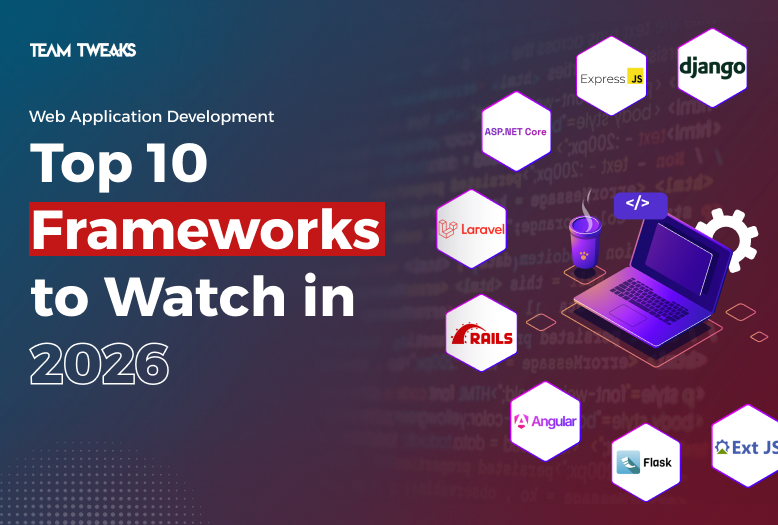
Web application development is changing fast, and new frameworks are shaping how modern apps are built. In 2026, businesses need web applications that are fast, secure, scalable, and easy to maintain. Choosing the right framework plays a big role in the success of any web project. With so many options available, it can be confusing to decide which framework best fits your needs. Some frameworks focus on performance, while others offer flexibility, strong community support, or easy integration with new technologies. Understanding the top frameworks to watch in 2026 can help developers and businesses build better, future-ready web applications.
This blog will help make your decision easier. We’ve listed the 10 most popular web application development frameworks below. From Ext JS to ASP.NET Core, you’ll find some of the best options to build modern, dynamic applications. Keep reading to find the perfect framework for your next project.
Top 10 Best Web Application Development Frameworks
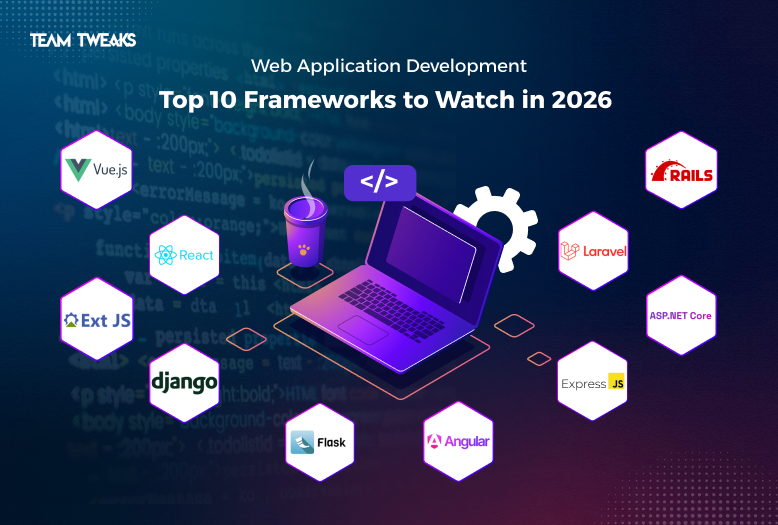
Choosing the right web application development framework is important for building fast, secure, and scalable web apps. Below are the top frameworks widely used by developers and businesses today.
List of Top 10 Best Web Application Development Frameworks
1. Ext JS
2. React
3. Angular
4. Vue.js
5. Django
6. Flask
7. Ruby on Rails
8. Express.js
9. Laravel
10. ASP.NET Core
1. Ext JS
Ext JS is a leading JavaScript framework designed for rapid web application development. Known for its extensive component library, it helps developers build rich, data-driven applications with ease. Ext JS comes with over 140 pre built components, such as:
- Grids
- Pivot Grids
- Exporters
- Layouts
- Charts
- D3 Adapters
These ready to use elements make it easy to create powerful and interactive user interfaces without writing everything from scratch.
Key Features:
- Comprehensive Component Library: Comes with more than 140 UI components that help developers build complex applications faster and maintain consistency across pages.
- Data Management and Visualization: Supports advanced data handling with grids, charts, and pivot tools, allowing developers to manage and visualize large datasets efficiently.
- Responsive Layout System: Offers flexible layouts that adapt seamlessly to different screen sizes and devices, ensuring a great user experience everywhere.
- Performance Optimization: Designed for speed, Ext JS uses optimized rendering techniques to keep applications smooth and responsive even with large data sets.
- Cross-Browser Compatibility: Ensures consistent performance across all major browsers, reducing testing and debugging time.
- Modern Tooling Support: Includes tools like Sencha CMD and supports popular IDEs such as Eclipse, JetBrains, and Visual Studio Code for an enhanced development workflow.
Ext JS is ideal for developers who want to build scalable, high-performance web apps quickly. Its rich components, modern tools, and responsive layouts make it a reliable choice for both enterprise-level applications and modern, interactive web projects.
2. React – Top Web Application Development Frameworks
React, developed by Facebook, has changed the way developers build web and mobile applications. It focuses on creating dynamic and interactive user interfaces, making it one of the most popular frameworks in modern web development. React helps developers build engaging web pages and also supports mobile app development, offering flexibility across platforms.
Key Features:
- Versatile Usage: Works for both web and mobile apps, making it a flexible choice for developers.
Component Based Architecture:
- Let’s developers create reusable UI components.
- Speeds up development and keeps the design consistent.
- Virtual DOM:
- Uses a virtual version of the Document Object Model to update only the parts that change.
- Improves app performance and speed.
- Robust Ecosystem:
- Comes with tools like Create React App and Next.js for quick setup.
- Has a huge community with many plugins and extensions.
- Single Page Applications (SPAs): Perfect for building SPAs with smooth navigation and a native app-like feel.
With its focus on performance and user experience, React is a top choice for developers who want to build fast, responsive, and modern web applications.
3. Angular
Angular, developed by Google, is a powerful framework used to build dynamic and interactive web applications. It’s based on TypeScript and provides a strong structure with many built-in features, making development faster and more organized.
Key Features:
- Two-Way Data Binding: Automatically keeps the data between the model and the view in sync.
- Dependency Injection: Improves efficiency by allowing reusable and easy to manage code.
- TypeScript Based: Enhances code quality and makes it easier to find and fix errors.
- Modular Development: Helps organize code into small, reusable modules.
- Rich Tooling: The Angular CLI simplifies tasks like creating components and deploying apps.
- Backed by Google: Offers regular updates, strong documentation, and an active developer community.
Angular is ideal for large scale projects where long term maintenance and performance are key. Many well-known companies like Upwork, Lego, PayPal, and Netflix use Angular for their web applications.
4. Vue.js
Vue.js is a modern JavaScript framework designed for building user interfaces and single page applications (SPAs). It mainly focuses on the “view” layer, making it simple to use and easy to add to existing projects. When paired with the right tools, Vue.js can also handle large and complex applications efficiently.
Key Features:
- High Adaptability: Vue.js is very flexible. You can start small, adding it to part of your website, or use it to build a full web app. It lets developers choose how much they want to use it.
- Easy to learn: Vue.js has a simple and clear structure. Its syntax is easy to understand, which helps beginners learn quickly while still offering advanced features for experienced developers.
- Rich Ecosystem:
- Vue Router – Helps manage navigation between pages, making it easier to build SPAs.
- Vuex – Manages the app’s data in one place, perfect for larger projects.
- Vue CLI – Speeds up development by providing tools for project setup, building, and deployment.
- Reactive Interfaces: Vue.js automatically updates the user interface when data changes. This makes creating interactive and dynamic web pages quick and simple.
- Performance and Flexibility: Vue.js is lightweight and fast. It delivers excellent performance and allows developers to organize their code in the way that best suits their project.
Vue.js is a great choice for developers who want a mix of simplicity, speed, and flexibility. Its easy learning curve, powerful tools, and supportive community make it suitable for both small websites and large-scale web apps. Whether you’re building a basic interactive page or a complete SPA, Vue.js gives you everything you need to bring your ideas to life efficiently.
5. Django
Django is a powerful and popular Python framework known for its “batteries included” approach, meaning it comes with many built-in features that make web development faster and easier. It helps developers create scalable web applications quickly while maintaining a clean and practical design.
Key Features:
- Fast Development: Django allows developers to build and launch web applications quickly. It handles many common tasks automatically, which saves time and reduces repetitive work.
- High-Level Framework: As a Python-based framework, Django is designed to simplify complex processes. It provides ready to use tools for authentication, database management, form handling, and more.
- Object-Relational Mapping (ORM): Django uses ORM to connect applications with databases. This means developers can work with databases using Python code instead of writing SQL queries directly.
- Strong Security: Security is one of Django’s biggest strengths. It includes built-in protection against common threats like SQL injection, cross site scripting (XSS), and cross-site request forgery (CSRF).
- Scalable and Reliable: Django is built to handle heavy traffic and large applications. It’s suitable for both small projects and enterprise level platforms.
- Automation and Defaults: Django simplifies development by offering default settings, automated tools, and a consistent structure, making coding faster and cleaner.
Django is ideal for developers who want a secure, reliable, and efficient way to build web applications. Its built in tools, strong security, and ability to handle large-scale projects make it a favorite among major companies like Pinterest, Disqus, YouTube, Spotify, and Instagram. Whether you’re working on a small project or a big web platform, Django helps you build it faster with less effort and more confidence.
6. Flask
Flask is a lightweight Python web framework that’s widely used for web application development. It’s known for being simple, flexible, and easy to use, making it a favorite among developers who want to build apps quickly, from small projects to medium sized web applications.
Key Features:
- Simple and Flexible: Flask is designed to be easy to start with. You can build a basic app in minutes and later expand it into something more complex. It doesn’t force a specific structure, giving developers full freedom to organize their projects their own way.
- Minimalistic Design: Flask provides only the essential tools needed to build a web app. This clean and minimal setup helps keep your code simple, organized, and easy to maintain.
- Extensions and Ecosystem: Even though Flask has a small core, it can be easily extended. You can add features like database support, form validation, file uploads, and authentication using community built extensions.
- Strong Community Support: Flask has a large and active community that offers plenty of tutorials, documentation, and third party libraries. This makes it easy for both beginners and experienced developers to find help and learn quickly.
- Perfect for Small to Medium Projects: Flask is ideal for small and medium web application development projects. It’s lightweight but powerful enough to handle complex features when needed.
- Developer Freedom: Flask doesn’t restrict how you build your app. Unlike some frameworks that have strict rules, Flask lets you choose your own tools, structure, and design patterns.
Flask is an excellent choice for developers who want freedom, simplicity, and speed in web application development. Its minimal core, strong community, and wide range of extensions make it suitable for everything from quick prototypes to fully functional web applications. Whether you’re just starting or building a more advanced system, Flask gives you the flexibility and control to bring your web app to life efficiently.
7. Ruby on Rails
Ruby on Rails, often called Rails, is a server side framework written in Ruby that makes web application development fast and efficient. It helps developers build powerful web apps quickly by following common patterns and rules, so they don’t have to write repetitive code. Rails follows the “convention over configuration” principle, which means most things work automatically without extra setup.
Key Features:
- Convention Over Configuration: Rails uses smart defaults and standard practices for common tasks. This means developers can focus on building features instead of spending time setting up configurations. It makes development faster, cleaner, and easier to manage.
- Scaffolding: Rails includes a feature called scaffolding that automatically creates parts of your web application, like models, views, and controllers. This helps developers build the basic structure of an app in just minutes, speeding up the web application development process.
- Active Record ORM: The Active Record system helps developers work with databases easily. Instead of writing SQL queries, you can use simple Ruby code to add, update, or delete data. This makes the code easier to read and maintain.
- Strong Community and Ecosystem: Ruby on Rails has a large and helpful community that contributes thousands of “gems” (plugins). These gems add extra features such as authentication, payments, and APIs, making it easier to build full featured applications.
- Trusted by Companies Worldwide: Many startups and major companies use Ruby on Rails because it helps them build scalable, reliable apps quickly. Its mature ecosystem and active support community make it a dependable choice for professional web application development.
Ruby on Rails is perfect for developers who want to build powerful web applications quickly and efficiently. Its “convention over configuration” philosophy, built-in tools like scaffolding, and database-friendly Active Record ORM allow you to write less code while doing more. Combined with a rich library of extensions and strong community support, Ruby on Rails remains one of the best frameworks for modern web application development.
8. Express.js – Best Web Application Development Frameworks
Express.js is a lightweight and flexible web framework for Node.js. It helps developers build fast and scalable web applications and APIs with ease. Express provides the basic tools needed to handle web requests and responses efficiently, making it ideal for creating modern web servers and microservices.
Key Features:
- Lightweight and Flexible: Express.js lets developers organize their applications however they prefer. It doesn’t enforce strict rules, giving full freedom over how projects are structured.
- Fast and Efficient: Built for performance, Express can process requests quickly and handle large amounts of traffic smoothly, making it perfect for real time or high traffic apps.
- Great for APIs: Express is one of the most popular frameworks for creating APIs, allowing different applications to communicate easily.
- JavaScript-Based: Since Express uses JavaScript, developers can use the same language for both the front end and back end of a project, making development faster and simpler.
- Widely Used in the Industry: Express is an important part of the MEAN stack (MongoDB, Express.js, Angular, and Node.js). Many well-known companies like MuleSoft, Accenture, Myntra, Uber, and Myspace use Express for building their applications.
Express.js is a simple yet powerful framework that makes building web apps and APIs quick and efficient. Its flexibility, speed, and active developer community make it a top choice for creating scalable, modern, and reliable applications of all sizes.
9. Laravel
Laravel is a modern and powerful PHP framework that helps developers build web applications easily and efficiently. Think of it as a complete toolbox for PHP developers; it comes with clean code, built in tools, and smart features that make development faster and simpler.
Key Features:
- Simplifies Common Tasks: Laravel makes everyday development tasks easy, such as
- User authentication
- Web page routing
- Data caching
These built-in tools save developers time so they can focus on creating new features and improving user experience.
- Elegant and Easy to Use: Laravel is known for its clean, readable syntax and simple structure. It allows developers to write beautiful and well organized code without unnecessary complexity.
- Blade Templating Engine: The Blade templating engine helps create dynamic web pages quickly and cleanly. It makes it easy to reuse templates and manage layouts efficiently.
- Eloquent ORM: Laravel includes an easy to use Object Relational Mapping (ORM) system called Eloquent, which helps developers work with databases using simple PHP code instead of SQL queries.
- Powerful Tools and Packages: Laravel provides many built-in tools and add-ons for features like security, testing, and API creation. This makes it suitable for projects of any size, from small websites to complex applications.
- Strong Learning Resources: Laracasts, a popular learning platform, offers video tutorials on Laravel and related technologies, helping developers learn quickly and build skills effectively.
- Trusted for Real Projects: Laravel is used to build various web applications like Neighborhood, Travel, Deltanet, Lender, and many more. Its reliability and flexibility make it a favorite among PHP developers worldwide.
Laravel is one of the most popular frameworks for PHP developers because it’s simple, elegant, and packed with useful features. Its powerful tools, beautiful syntax, and strong community support make it perfect for building everything from small websites to large, complex web applications efficiently.
10. ASP.NET Core – Web Application Development Frameworks
ASP.NET Core is a powerful and flexible web framework developed by Microsoft for building modern, high performance web applications. It’s lightweight, modular, and designed to run smoothly across different platforms like macOS, Windows and Linux.
Key Features:
- Cross Platform Support: ASP.NET Core works on multiple operating systems, so developers can build and run applications anywhere without being limited to Windows.
- Fast and Efficient: The framework is optimized for speed and performance, making it ideal for handling large, enterprise level web projects that require high scalability.
- Modular and Lightweight: ASP.NET Core is built with a modular architecture, meaning you can use only the components you need. This helps keep applications lightweight and efficient.
- Integration with Visual Studio and Azure: It works seamlessly with Visual Studio (Microsoft’s development environment) and Azure (Microsoft’s cloud platform). This makes it easier to develop, deploy, and manage web applications in the cloud.
- Multi-Language Support: ASP.NET Core supports various programming languages, including C#, F#, and VB.NET, giving developers flexibility in choosing their preferred language.
- Strong Community and Enterprise Support: Backed by Microsoft and a large global developer community, ASP.NET Core provides excellent documentation, regular updates, and long term support for enterprise level solutions.
ASP.NET Core is a top choice for building fast, secure, and scalable web applications. Its cross-platform nature, cloud integration, and enterprise level capabilities make it ideal for developers and businesses aiming to create reliable and high performing web solutions.
Final Thoughts
The world of web application development keeps growing with new tools and frameworks that make building apps faster, smarter, and more efficient. Each framework on this list, whether it’s React.js, Angular, Vue.js, or Django, offers unique strengths that can help developers create modern, high-quality web applications.
As technology continues to evolve in 2026, choosing the right framework will depend on your project goals, team skills, and business needs. By staying updated and learning these top frameworks, developers and businesses can stay ahead in the digital world and build web apps that deliver great performance and user experiences.