When it comes to successful startups, Uber has undoubtedly secured the top position. Operating in more than 85 countries, Uber has raised over $20.9 billion in funding. Such impressive figures have inspired numerous business owners and entrepreneurs to build their own Uber-like app.
Are you considering creating your own Uber-like app? If so, you’re in the right place. This guide will provide answers to all your questions related to launching an Uber clone. We will discuss a range of key topics, including:
- How Uber works: A breakdown of the Uber business model.
- How Uber generates revenue: An understanding of Uber’s revenue model.
- Uber’s business strategy: What has contributed to Uber’s success?
Before diving into these areas, let’s first take a quick look at Uber’s journey to success.
Uber’s Success Story – What You Need to Know
In 2010, Uber sparked a revolution in the taxi industry. Since its launch, this ride-hailing giant has continued to grow without looking back. Initially, it began as a transportation company with licensed, experienced drivers offering on-demand taxi services. The core idea was to connect passengers with drivers through an on-demand mobile application.
How did Uber come into existence?
The idea to create an Uber-like app came to the minds of founders Travis Kalanick and Garrett Camp in 2008. While the initial prototype was built by Garrett, the app went live in 2010. Back then, building an Uber-like app was a challenging and time-consuming task. However, today, numerous mobile app development companies can help you create an app like Uber within weeks.
In its early days, Uber was known as UberCab, and the service primarily involved hailing black luxury cars. The name was soon changed from UberCab to Uber.. Here’s a brief summary of Uber’s journey over the years:
- 2010: Uber launched in San Francisco with UberCab, focusing on high-end luxury black cars.
- 2012: Uber expanded internationally, beginning with Paris.
- 2014: UberPool, the ride-sharing service, was introduced.
- 2016: Uber made a foray into self-driving technology.
- 2020: Uber Eats became a major part of the business.
Today, Uber is estimated to have over 100 million monthly active users. It is a unicorn valued at nearly $60 billion and offers a variety of ride options, such as:
| Uber Service | Description |
|---|---|
| UberX | The basic Uber ride. |
| UberXL | Vehicles that can carry up to six passengers. |
| Uber Transit | Provides real-time public transport information. |
| Uber Pool | Offers shared ride options. |
| Uber Comfort | Cars with extra legroom. |
| Uber Green | Electric vehicles . |
| Uber Black | Luxury vehicles. |
| Uber WAV | Wheelchair-accessible vehicles. |
| Uber Lux | High-end luxury cars with top-rated drivers. |
| Uber Black SUV | Premium SUVs with top-rated drivers. |
| Bikes | On-demand electric bikes. |
| Scooters | Electric scooters for short rides. |
| Uber Taxi | Local taxis partnered with Uber. |
| Uber Auto | On-demand auto-rickshaws in certain countries. |
| Uber Flash | A specialized taxi service in Hong Kong. |
| Uber Air | Flying vehicles, a futuristic transportation option. |
Uber Business Model – How Does Uber Operate?
Uber introduced the idea of an aggregator business model. In this model, Uber partners with drivers who operate under its brand, as opposed to owning a fleet of cars itself. The company enables drivers to use their own vehicles while working for Uber. Although the service is provided by the partners (drivers), Uber ensures the highest service standards are maintained.
How does Uber work?
Uber’s business model operates on two fronts. The first is marketing the platform to customers as a ride-hailing service. Uber allows users to book a cab with just a few taps on their smartphone. On the other hand, Uber focuses on recruiting numerous drivers to join the platform, ensuring a smooth and seamless experience for passengers.
Uber Business Model: Key Segments
Uber caters to a broad customer base, including:
- Individuals who don’t own a car.
- People who are either unable or choose not to drive.
- Tourists visiting the city.
- Individuals who need transport for special occasions.
- People seeking luxury travel.
How Uber Works for Passengers
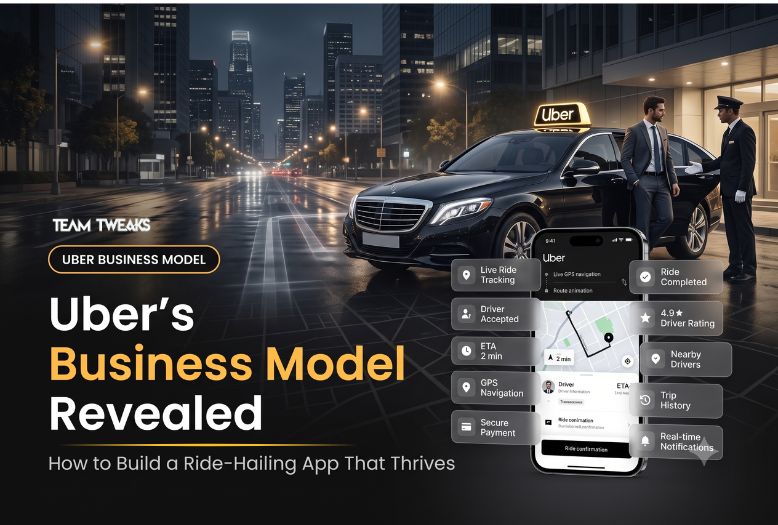
For passengers, the Uber app is the first point of contact. Users input pickup and destination details, select the type of ride they want (based on vehicle size, price, and estimated drop-off time), and confirm their request. The app’s algorithm matches the request with available drivers nearby. Drivers have the option to accept or decline based on their availability.
Once a driver accepts the request, the passenger receives the driver’s details and the estimated time of arrival (ETA). The value proposition for passengers includes:
- On-demand cab bookings.
- Real-time tracking.
- Accurate ETAs.
- Cashless rides.
- Reduced wait times.
- Upfront pricing.
- Multiple ride options to choose from.
How Uber Works for Drivers
While drivers own and operate their cabs, Uber ensures its branding is evident and that the platform is secure. As soon as a driver accepts a request, they receive the necessary passenger information. Upon arrival at the pickup point, the driver verifies the passenger’s name and destination using a two-factor authentication system, where the rider provides a security pin.
The value propositions for drivers include:
- Flexibility to work as per their schedule.
- Increased earning potential.
- Reduced idle time between rides.
- Training and support.
- Improved trip allocation.
- Assistance with obtaining vehicle loans.
How Does Uber Make Money? A Look at Uber’s Revenue Model – Uber Business
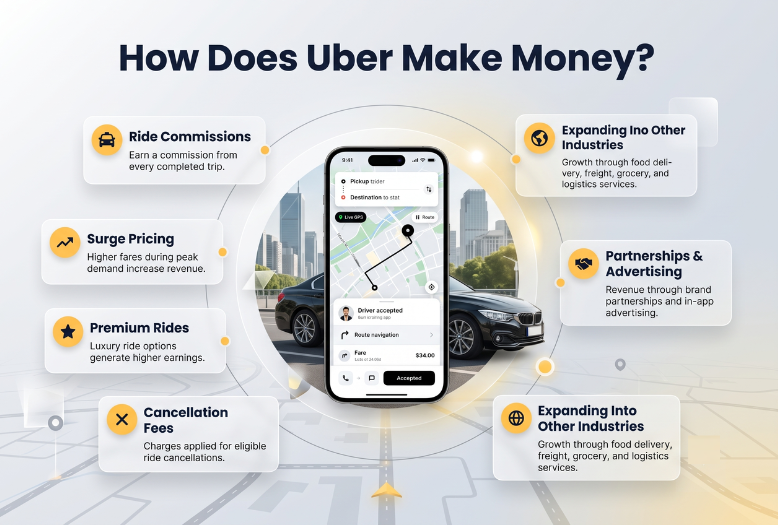
Similar to other ride-hailing services, Uber generates revenue from ride fares. But what sets Uber apart is the volume of rides and its expansion into other industries, enabling the company to scale up significantly.
Uber’s revenue model can be broken down into the following categories:
1. Ride Commissions
When a passenger books a ride, they pay Uber, which transfers a portion of the fare to the driver, retaining a commission for itself. This commission can range from 15% to 30%, depending on factors such as location and demand.
2. Surge Pricing
Surge pricing, or dynamic pricing, is another important revenue stream. This model adjusts ride fares based on demand. For example, if it’s raining or there’s a higher volume of passengers (such as during an event or at the airport), Uber increases prices. Surge pricing encourages drivers to operate in high-demand areas, benefiting both Uber and the drivers.
3. Premium Rides
Uber offers a range of premium ride options, from Uber Black to Uber Lux. These rides offer higher profit margins, contributing to a substantial part of Uber’s revenue.
4. Cancellation Fees
Uber allows passengers to cancel rides. However, if the cancellation occurs after a certain period, a cancellation fee is charged.
5. Vehicle Leasing Program
In several countries, Uber offers a vehicle leasing program to help drivers get onboard faster. Drivers make an upfront deposit, and subsequent payments are deducted from their earnings.
6. Partnerships and Advertising
Uber’s app has become a widely used platform, which opens doors for sponsored content and advertising. Brands partner with Uber to promote their products and services to millions of active users.
7. Expanding Into Other Industries
Uber’s technology has allowed it to expand into several other industries, including food delivery, freight transportation, healthcare, and even water taxis. These additional verticals contribute significantly to Uber’s overall revenue.
Uber’s Expansion Into Other Industries
Let’s explore some of Uber’s most popular ventures outside of ride-hailing:
- Uber Eats: Launched in 2016, Uber Eats has experienced exponential growth. It allows users to order food from their favorite restaurants, which is then delivered by Uber’s delivery partners. Uber Eats generates revenue through customer delivery fees, revenue-sharing with restaurant partners, and advertising income.
- Uber Freight: This on-demand trucking service connects shippers with carriers. Launched in 2017, Uber Freight offers a convenient solution for transporting goods, much like Uber does for people.
- Uber Health: In collaboration with healthcare organizations, Uber Health provides ride services for patients. Healthcare professionals can schedule rides for patients to ensure they receive the necessary care.
- Uber Boat: Available in countries like Turkey and Croatia, Uber Boat allows users to book a water taxi or yacht for transportation over water.
- Uber Chopper: Uber has also partnered with Airbus to offer helicopter services in select cities.
Uber’s Business Strategy – Why Has Uber Been So Successful?
Uber’s success has encouraged many entrepreneurs to develop similar apps. To replicate Uber’s triumph, it’s essential to understand the key factors behind its success:
Identifying a Need
Uber recognized a gap in the market and acted on it immediately. Whether it was solving the need for easier cab access or delivering food, Uber addressed real customer pain points.
Comfort and Convenience
Uber focused on making transportation as convenient as possible. Before Uber, people faced uncertainty in wait times, availability, and pricing when trying to hail a cab. Uber solved these issues, offering a smooth and reliable experience.
Prioritizing Safety
Safety was a primary concern for passengers in taxis. Uber addressed this by introducing features like real-time GPS tracking, two-factor authentication, and SOS buttons, which built customer trust.
Timely Alerts and Recommendations
Uber keeps users informed through real-time notifications about ride requests, estimated arrival times, and optimized routes. This helps avoid high-traffic areas and reduces waiting times.
Digital Payments
Uber made payments easier by introducing multiple payment gateways, allowing users to pay digitally rather than handling cash
Effective Marketing and Advertising
Uber invested heavily in marketing and advertising to make its services known, especially when it first launched in San Francisco. It used various media platforms to spread awareness about its new and unique ride-hailing service. To gain traction, Uber implemented campaigns offering first-time riders free trips and discounts, which helped grow its user base quickly. As a result, word-of-mouth marketing played a critical role in Uber’s initial popularity, with users themselves promoting the service to others.
These are some of the key takeaways for entrepreneurs looking to build a business like Uber. Understanding these factors can help you create a more successful Uber-like app.
How to Build a Ride-Hailing App Like Uber
Building something like Uber isn’t a single project, it’s a series of stages that build on each other, from early research all the way through to launch and beyond. Here’s how the process typically unfolds.
Step 1: Research the Market and Validate Your Idea
Every ride-hailing app that actually succeeds starts with real homework. Look closely at who you’re building for, study what Uber, Lyft, and local taxi services are already doing well (and where they fall short), and get clear on the specific problem your app is solving. Are you focused on everyday commuters? Airport runs? Corporate travel? Picking a clear niche early makes it much easier to build something that doesn’t just blend into the crowd.
Step 2: Define Your Business Model
Before a single line of code gets written, figure out how the platform will actually make money. Most ride-hailing businesses lean on some mix of ride commissions, surge pricing, subscriptions, cancellation fees, or in-app ads. You’ll also need to decide on your driver structure will you work with independent drivers, partner with fleet owners, or run your own vehicles?
Step 3: List the Essential Features
Map out exactly what each type of user needs. At minimum, you’re building three products: a rider app, a driver app, and an admin dashboard. The basics that riders and drivers now expect include ride booking, live GPS tracking, fare estimates, secure in-app payments, scheduled rides, ratings, trip history, and push notifications. Skip any of these and the app will feel incomplete compared to what’s already out there.
Step 4: Design a Simple, Intuitive Experience
A huge part of Uber’s success comes down to how effortless it feels to use. Riders should be able to book a trip in just a couple of taps, no confusion involved. The driver-facing side matters just as much drivers need to accept rides, follow routes, and check their earnings without the app getting in their way.
Step 5: Choose the Right Technology Stack
Pick tools that won’t box you in as the platform grows. A lot of teams go with Flutter or React Native to build for iOS and Android at once, while the backend often runs on Node.js, Python, or Java. On top of that, you’ll need to wire in things like Google Maps, a payment gateway, cloud hosting, SMS verification, and push notification services, all the connective tissue that makes the app actually function day to day.
Step 6: Build and Connect the Core Features
With the design locked in, development shifts to bringing everything together real time ride matching, live tracking, secure payments, route optimization, driver verification, and notifications. None of these work well in isolation; the real challenge is making them talk to each other smoothly so the whole experience feels like one product instead of a patchwork of features.
Step 7: Test Everything Before Launch
This is the stage where problems need to surface before your users find them. Run the app through its paces, bookings, payments, GPS accuracy, notifications across different phones and operating systems. Iron out bugs, tighten up performance, and make sure data security is solid before anyone outside your team touches it.
Step 8: Launch, Then Keep Improving
Once testing checks out, it’s time to publish on the App Store and Google Play. But launch day isn’t the finish line, it’s really the start of the next phase. Keep an ear on user feedback, patch issues quickly, and roll out updates over time: things like AI-driven ride matching, smarter pricing, EV support, or better analytics. The platforms that stay competitive with the big players are the ones that never stop iterating.
How Much Does It Cost to Build an App Like Uber?
One of the most common questions aspiring entrepreneurs ask is: How much does it cost to build an app like Uber? While there is no one-size-fits-all answer, it is possible to estimate costs based on certain factors.
Cost Components for Uber-Like App Development
Several elements contribute to the cost of developing an Uber like app. These include:
- UI/UX Design: The app’s UI/UX design plays a critical role in providing a user-friendly experience.
- Web Development: A robust and scalable web infrastructure is essential for app performance.
- Backend Development: The backend server is the core of the application, handling everything from user data to ride requests.
- Operating System: The app needs to work on multiple platforms iOS and Android to maximize its user base. Submit the passenger and driver apps to Google Play Store and Apple App Store, ensuring they meet all submission guidelines.
- Advanced Features: Features such as GPS navigation, payment gateways, real-time tracking, and push notifications add to development complexity.
- Third-Party Service API Integrations: Uber relies on multiple APIs for functions like map integration, notifications, and payment processing.
- Post-Deployment Maintenance: After the Mobile app is launched, ongoing maintenance and quality assurance are required to keep the app running smoothly.
- Testing: Testing ensures that all features, like booking, payments, and notifications, work as intended. It involves checking usability on different devices, securing user data, and ensuring the app performs well under heavy use. A beta version is released for feedback.
Development Timeline and Costs
On average, creating an Uber-like app requires between 300 to 500 development hours. The total development cost will largely depend on the hourly rates charged by developers, which vary depending on the region.
For example, developers in the USA charge between $100 to $200 per hour, while those in Asian countries may charge between $40 to $50 per hour. Based on these rates, the overall development cost for an Uber-like app can range between $25,000 and $30,000, depending on the features, complexity, and developer rates.
Cost-Effective Alternatives
For those looking to develop a cost-effective Uber-like app, partnering with an experienced app development company is key. Companies like Team Tweaks specialize in creating Uber-like apps and can deliver high-quality results within your budget.
Want a Quote for Your Uber-Like App? We’ve Got You Covered!
If you’re planning to build an Uber-like app with advanced features, you need the right development partner. At Team tweaks, we have extensive experience in developing ride-hailing apps with robust functionality and innovative features. Whether you’re looking for a basic Uber clone or a custom solution with unique features, we can provide a tailored quote that meets your business needs.
What Makes an Uber-Like App Successful?
If you’re inspired to build a similar app, it’s important to focus on the following key areas:
- Market Need: Like Uber, identify the specific problems your app will solve and act on them.
- User Convenience: Build an app that offers comfort, convenience, and a seamless experience for users.
- Safety and Trust: Integrate features that promote safety and transparency, such as real-time tracking and secure payments.
- Technological Excellence: Ensure your app is built on a robust and scalable platform to handle the demand.
- Effective Marketing: Don’t underestimate the power of marketing and advertising. Develop a strong campaign to attract users to your platform.
The ride-hailing industry is still evolving, and with the right approach, your Uber-like app can carve out its own niche in the market. Whether you want to focus on transportation, delivery services, or other verticals, now is the time to build and grow.
Uber Business: Ride-Hailing App Trends That Will Shape the Industry in 2026
The ride-hailing industry continues to evolve rapidly, and businesses entering the market in 2026 need to focus on innovation rather than simply copying existing platforms. Modern users expect faster bookings, personalized experiences, secure payments, and seamless app performance across multiple devices. Some of the biggest trends shaping Uber like app development in 2026 include:
- AI-powered ride matching for faster driver allocation
- Electric vehicle (EV) integration and eco-friendly ride options
- Subscription-based ride plans for frequent users
- Voice-enabled ride booking
- Multi-modal transportation (cars, bikes, scooters, public transit)
- Real-time analytics dashboards for fleet management
- Contactless payments and digital wallets
- Enhanced safety features with live trip monitoring
- Cloud-native architecture for better scalability
- Cross-platform apps built using Flutter for faster deployment Businesses adopting these technologies can improve customer satisfaction, reduce operational costs, and gain a competitive advantage in the growing ride-hailing market.
Uber Business: How Artificial Intelligence (AI) Is Making Uber-Like Apps Smarter
Artificial Intelligence (AI) has become one of the biggest drivers of innovation in ride-hailing applications. Instead of relying only on traditional algorithms, AI enables smarter decision-making, improved automation, and a better experience for both riders and drivers. Some of the most valuable AI features include:
- AI-Based Driver Matching: AI instantly analyzes driver location, traffic conditions, rider preferences, and availability to assign the most suitable driver within seconds.
- Intelligent Route Optimization: Machine learning helps identify the fastest and most efficient routes by considering live traffic, accidents, road closures, and historical travel patterns.
- Dynamic Pricing Optimization: AI predicts demand based on weather, holidays, local events, and peak hours to generate fair surge pricing while maximizing platform revenue.
- Fraud Detection: AI continuously monitors transactions and user behavior to identify suspicious activities, fake accounts, payment fraud, and unusual booking patterns.
- Predictive Demand Forecasting: Businesses can use AI to forecast ride demand across different cities and time periods, allowing them to position drivers where demand is expected to increase.
- Personalized Customer Experience: AI recommends preferred ride types, payment methods, pickup locations, and promotional offers based on each user’s booking history.
- AI Chatbots for Customer Support: Modern AI chatbots provide instant responses to common customer questions, reducing support costs while improving response times.
- Voice Assistants and Smart Notifications: Users can book rides using voice commands, while AI delivers personalized notifications about ride status, traffic delays, promotions, and estimated arrival times.
By integrating AI into an Uber-like app, businesses can improve operational efficiency, enhance user satisfaction, reduce costs, and create a smarter transportation platform that is ready for the future. These features are becoming standard expectations in 2026, making AI an essential part of modern ride-hailing app development rather than an optional upgrade.
Conclusion:
Developing an Uber-like app requires careful planning and understanding of both the business model and the technology that powers it. Uber’s success is based on its innovative business strategy, a comprehensive revenue model, and its ability to adapt to new markets and industries.
Allow us to help you bring your vision to life. Team Tweaks, a Mobile App Development Company in Chennai, headquartered in India and serving clients across the USA, UAE, and other global markets, specializes in developing innovative apps, including food delivery, ecommerce, and custom software solutions. With a focus on Android app development and Flutter app development, we ensure your product is equipped with advanced features, scalability, and the ability to thrive in today’s competitive market. Reach out to us today for a quote or to learn how we can help you build your next successful app.
Frequently Asked Questions
Uber follows an aggregator business model that connects passengers with independent drivers through a mobile application. Instead of owning vehicles, Uber provides the technology platform, manages bookings, processes payments, and earns a commission from each completed ride.
Uber earns money through multiple revenue streams, including ride commissions, surge pricing, cancellation fees, premium ride services, Uber Eats, Uber Freight, advertising, and subscription services like Uber One.
The cost of developing an Uber-like app depends on its features, platform, technology stack, and development team’s location.
Some of the must-have features include:
User registration and profiles
Ride booking and scheduling
GPS tracking and navigation
Fare estimation
Secure payment gateway
Driver and rider ratings
Push notifications
Ride history
Admin dashboard
Artificial Intelligence helps improve driver matching, route optimization, demand forecasting, dynamic pricing, fraud detection, customer support, and personalized user experiences. AI makes ride-hailing apps smarter, faster, and more efficient.
The development timeline depends on the project’s complexity. A basic MVP can take around 3 to 5 months, while a fully featured Uber-like app with AI integration and custom functionality may require 6 to 9 months or longer.
Some of the latest trends include AI-powered ride matching, electric vehicle integration, subscription plans, contactless payments, cloud-based infrastructure, voice-enabled booking, advanced safety features, and multi-modal transportation services.
Yes. Using cross-platform frameworks like Flutter allows businesses to develop a single application that works seamlessly on both Android and iOS, reducing development time and overall costs.
Team Tweaks is a Mobile App Development Companies in Chennai, headquartered in India, serving clients across the USA, UAE, and other global markets. We build scalable, feature-rich Uber-like applications with AI-powered capabilities, secure payment integration, real-time GPS tracking, and customized solutions tailored to your business goals.