Virtualization in cloud computing is a foundational technology that enables the efficient use of resources, making it crucial for developing, deploying, and scaling mobile apps. By creating virtual instances of servers, storage, and networks, virtualization allows mobile app developers to optimize performance, reduce costs, and ensure scalability. This technology is essential for cloud-based mobile app services, providing the flexibility and reliability needed to deliver seamless user experiences. In the context of cloud computing and migration services, virtualization is a key enabler that supports the rapid growth and adaptability of mobile application development.
What is Virtualization in Cloud Computing?
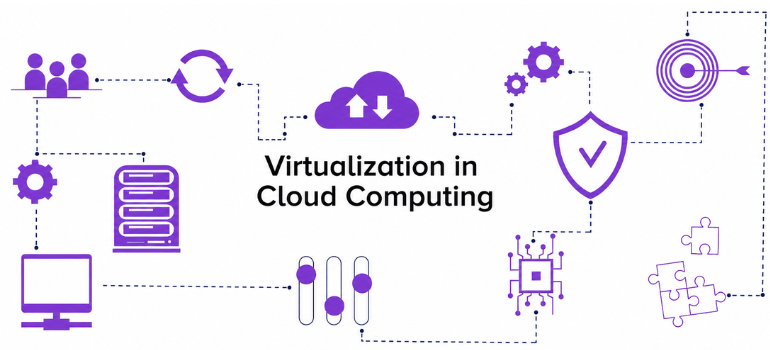
Virtualization in cloud computing is a technology that allows multiple virtual environments to run on a single physical machine. It involves creating virtual versions of servers, storage, and networks, which can operate independently while sharing the same hardware. This is made possible by a software layer called a hypervisor, which manages the allocation of resources to each virtual machine (VM).
The hypervisor ensures that each VM gets the computing power, memory, and storage it needs, enabling efficient use of physical resources. In cloud computing, virtualization is key because it allows providers to offer flexible, scalable, and cost-effective services to businesses. This is particularly beneficial for mobile app development, where developers can quickly deploy, test, and scale apps in a virtualized cloud environment.
Why is Virtualization Important?
Virtualization in cloud computing plays a critical role in optimizing resources, allowing multiple virtual machines to share the same physical hardware. This efficient use of resources reduces the need for multiple physical servers, leading to lower operational costs and energy consumption. For mobile app development, virtualization is vital because it offers cost efficiency and scalability. Developers can quickly scale up or down based on demand, ensuring that apps run smoothly without overburdening resources.
In cloud migration services, virtualization simplifies the process by allowing seamless transitions from on-premises infrastructure to the cloud. This flexibility is crucial for businesses looking to modernize their mobile app services without significant downtime or disruptions. By using virtualization, companies can better manage workloads, improve app performance, and respond quickly to changing needs, all while keeping costs under control.
Benefits of Virtualization in Cloud Computing
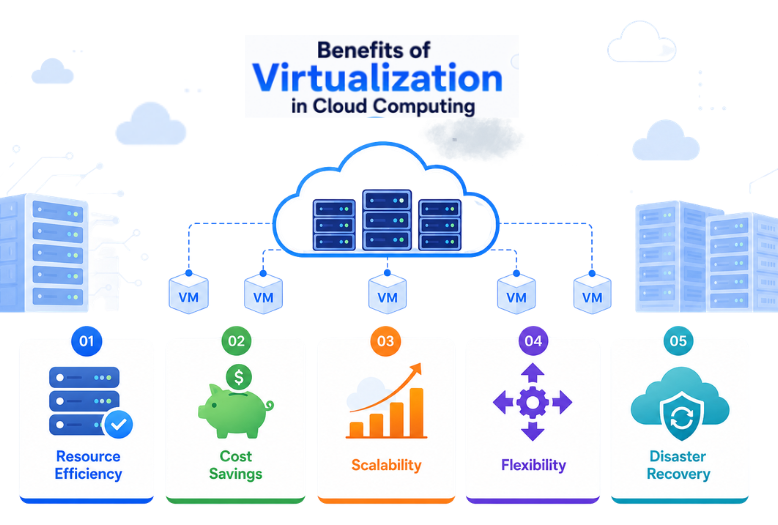
- Virtualization in cloud computing offers a range of benefits that enhance the efficiency and flexibility of cloud services, especially for mobile app development and deployment.
- Resource Efficiency: Virtualization allows for the optimized use of hardware resources by running multiple virtual machines on a single physical server. This ensures better utilization of computing power, storage, and network resources, reducing the need for additional hardware.
- Cost Savings: By reducing the need for physical hardware, virtualization helps lower operational costs. Businesses no longer need to invest in multiple servers, which also leads to savings on energy and maintenance costs. This is particularly beneficial for mobile app development projects, where resources can be allocated as needed, without overspending.
- Scalability: One of the key advantages of virtualization in cloud computing is the ability to scale resources up or down easily. For mobile app services, this means that developers can adjust computing power based on user demand, ensuring apps run smoothly during peak times without overloading the system.
- Flexibility: Virtualization supports multiple operating systems and applications on a single physical server. This flexibility allows developers to test and run different environments simultaneously, making it easier to manage various mobile app development stages, from testing to deployment.
- Disaster Recovery: Virtualization also enhances disaster recovery capabilities. Since virtual machines can be easily backed up and restored, businesses can minimize downtime and data loss. This is crucial for mobile app services that rely on high availability and quick recovery during unexpected outages.
How Does Virtualization Work?
Virtualization in cloud computing relies on hypervisors, which are software layers that create and manage virtual machines (VMs) on a physical server. The hypervisor sits between the hardware and the operating systems, allowing multiple VMs to run independently on the same physical machine. This enables different applications and operating systems to coexist without interfering with each other, optimizing resource use and providing flexibility.
The virtualization process begins with the hypervisor partitioning the physical hardware into isolated virtual environments. Each VM operates like a standalone computer, with its own operating system and applications. The hypervisor allocates resources such as CPU, memory, and storage to each VM, ensuring they perform efficiently without exceeding the physical limits of the underlying hardware. This setup allows businesses to maximize their hardware investments while maintaining high performance and reliability.
In cloud environments, virtualization plays a critical role in deploying, testing, and scaling mobile apps. Developers can quickly create multiple VMs to test different versions of an app across various operating systems and configurations. This ability to run simultaneous tests in isolated environments accelerates the development process and improves app quality.
When it comes to scaling, virtualization in cloud computing allows mobile apps to handle increased traffic seamlessly. As user demand grows, additional VMs can be deployed to distribute the load, ensuring the app remains responsive and reliable. Conversely, when demand decreases, resources can be scaled down, preventing unnecessary costs.
Virtualization also supports continuous integration and continuous deployment (CI/CD) practices, which are essential for modern mobile app development. By providing a flexible and scalable environment, virtualization enables frequent updates, quick testing, and reliable deployments, all within the cloud.
How Virtualization Enhances On-Demand Mobile App Development
Rapid Deployment: In on-demand mobile app development, speed is crucial. Virtualization allows for the quick creation and deployment of virtual machines (VMs), which enables developers to launch and update apps rapidly. This is essential in the on-demand space, where user expectations and market conditions change frequently.

Scalability: On-demand apps, such as those for ride-sharing, food delivery, or streaming services, often experience fluctuating user traffic. Virtualization in cloud computing allows these apps to scale resources up or down easily. When user demand spikes, additional VMs can be deployed to handle the load, ensuring smooth operation without service interruptions.
Testing Across Multiple Environments: On-demand apps need to be tested across various devices and operating systems to ensure compatibility and performance. Virtualization enables developers to run multiple VMs simultaneously, each with different configurations. This ensures that the app performs well on all platforms, providing a consistent user experience.
Cost Efficiency: On-demand app development often involves continuous updates and iterations. Virtualization reduces the need for extensive physical infrastructure, lowering operational costs. This cost efficiency is vital for maintaining profitability while ensuring that the app can scale to meet user demands.
Continuous Integration/Continuous Deployment (CI/CD): On-demand apps require frequent updates and new features to stay competitive. Virtualization supports CI/CD practices by providing an environment where updates can be tested and deployed quickly and reliably. This ensures that new features can be rolled out to users without delays.
Virtualization in Cloud Computing: Types of Virtualization in Cloud Computing and Characteristics
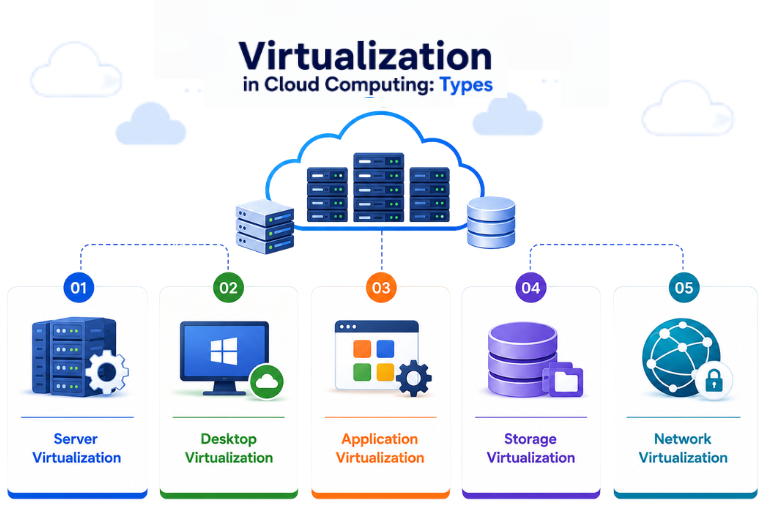
Virtualization in cloud computing comes in several types, each serving different purposes and offering unique benefits for various applications, including mobile app development.
Types of Virtualization:
- Server Virtualization: This involves partitioning a physical server into multiple virtual machines (VMs). Each VM operates independently with its own operating system and applications, allowing businesses to maximize server resources and reduce hardware costs. For mobile app services, server virtualization helps in efficiently managing server loads and scaling resources as needed.
- Desktop Virtualization: This type centralizes desktop environments on servers rather than on individual devices. Users can access their desktops remotely from any device. This is beneficial for mobile app developers who need to test applications across different desktop environments without maintaining multiple physical machines.
- Application Virtualization: Application virtualization allows apps to run in virtual environments without being installed on end-user devices. This enables mobile app developers to deliver and update apps quickly and ensures that users always have access to the latest version without complex installations.
- Storage Virtualization: This technology pools physical storage from multiple devices into a single virtual storage unit. It simplifies storage management and improves efficiency. For mobile app development, this means easier data management and quicker access to application data.
- Network Virtualization: Network virtualization creates a virtual version of a network, complete with dedicated bandwidth and network resources. This helps in managing network traffic efficiently and ensures that mobile apps have reliable and fast network performance.
Key Characteristics:
- Multi-tenancy: Virtualization allows multiple users or applications to share the same physical resources without interference. This is particularly useful for mobile app services, where different apps or clients can use the same infrastructure efficiently.
- Isolation: Each virtual environment operates independently from others. This isolation ensures that one app or user’s activities do not affect others, which is crucial for maintaining the performance and security of mobile applications.
- Scalability: Virtualization supports scaling resources up or down based on demand. For mobile apps, this means that resources can be adjusted dynamically to handle changes in user traffic, ensuring optimal performance and cost efficiency.
- Security: Virtualization provides enhanced security through isolated virtual environments and centralized management. This protects mobile app data and applications from unauthorized access and potential breaches.
How Virtualization Powers Cloud Computing for Mobile Apps
Virtualization in cloud computing plays a crucial role in enhancing the development, testing, and deployment of mobile apps. By utilizing virtualization, mobile app developers can benefit from improved performance, reliability, and security.
Development and Testing: Virtualization provides developers with isolated environments to build and test mobile apps. By creating virtual machines (VMs) with different configurations, developers can ensure that their apps perform well across various operating systems and devices. This flexibility allows for thorough testing without the need for extensive physical hardware, speeding up the development cycle and reducing costs.
Deployment: When it comes to deploying mobile apps, virtualization allows for seamless scaling and management. Developers can deploy apps on virtual servers in the cloud, which can be easily scaled up or down based on user demand. This means that mobile apps can handle increased traffic without performance issues, providing a smooth user experience.
Performance and Reliability: Virtualization optimizes resource allocation by managing how virtual machines use physical hardware. This ensures that mobile apps receive the necessary resources to perform efficiently, even during peak usage times. Virtual environments can be quickly adjusted to address performance issues, making sure that apps remain reliable and responsive.
Security: Virtualization enhances the security of mobile apps by isolating them in separate virtual environments. This isolation helps protect app data and reduces the risk of security breaches. Additionally, virtualization enables centralized management of security policies and updates, which further safeguards mobile apps from vulnerabilities.
Difference Between Virtualization and Cloud Computing
Virtualization and cloud computing are closely related but distinct concepts. Virtualization is a technology that creates virtual instances of physical resources such as servers, storage, and networks. It allows multiple virtual environments to run on a single physical machine, optimizing resource use and providing flexibility. In contrast, cloud computing is a service model that delivers computing resources and services over the internet. It leverages virtualization to provide scalable and on-demand resources, such as virtual machines and storage, to users.
Virtualization enables cloud computing by allowing cloud providers to offer virtualized resources to customers. Through virtualization, cloud providers can efficiently manage and allocate physical resources, creating a pool of virtual resources that users can access as needed. This technology underpins the cloud’s ability to deliver scalable and flexible services, including those used in mobile app development.
Distinct Roles in Mobile App Development:
- Virtualization provides the infrastructure needed for developing, testing, and deploying mobile apps. It allows developers to create isolated environments for testing different configurations and ensures that applications run consistently across various setups.
- Cloud Computing offers the platforms and services needed to deploy and manage mobile apps at scale. It supports rapid deployment, continuous integration, and scaling of applications based on user demand, which is essential for modern mobile app services.
Server Virtualization vs. Containerization
Server Virtualization: Server virtualization involves dividing a physical server into multiple virtual machines (VMs), each operating with its own operating system and applications. This approach helps optimize resource use and reduce hardware costs. In cloud environments, server virtualization allows for efficient management of server loads and supports scaling of resources as needed. For mobile app development, server virtualization enables developers to manage different app environments effectively, providing isolated testing and deployment setups.
Containerization: Containerization is a technology that packages applications and their dependencies into containers, which are lightweight and portable. Containers share the host operating system’s kernel but operate in isolated environments. This method contrasts with server virtualization, where each virtual machine includes its own operating system.
Comparison:
- Resource Usage: Containers are more resource-efficient than VMs because they share the host operating system and use fewer resources. This efficiency is beneficial for mobile app deployment where multiple instances or versions of an app may be needed.
- Deployment: Containers provide faster deployment compared to VMs due to their lightweight nature. This speed is advantageous in DevOps practices, where quick rollouts and updates are crucial.
- Scalability: Both server virtualization and containerization offer scalability, but containers are generally more scalable due to their smaller footprint and faster start-up times.
Advantages of Containerization:
- Resource Efficiency: Containers use fewer resources, making them ideal for deploying numerous instances of mobile apps or microservices.
- Rapid Deployment: Containers enable quick and consistent deployment, which is crucial for continuous integration/continuous delivery (CI/CD) practices.
- Isolation and Portability: Containers provide strong isolation between applications and are highly portable across different environments, ensuring consistent performance and reducing deployment issues.

Conclusion
Virtualization in cloud computing is essential for mobile app development, providing the flexibility, scalability, and cost-efficiency needed for modern applications. By enabling efficient resource management and rapid deployment, virtualization supports DevOps practices and enhances app performance and security. As cloud services and virtualization technologies continue to evolve, they promise even greater advancements in app development and deployment, paving the way for more innovative and responsive mobile solutions in the future.
Frequently Asked Questions
Virtualization in cloud computing is a technology that creates virtual versions of servers, storage, networks, and operating systems on a single physical machine, improving resource utilization and flexibility.
Virtualization improves resource efficiency, reduces infrastructure costs, enables scalability, simplifies management, and supports disaster recovery for cloud-based applications.
Virtualization works through a hypervisor that creates and manages multiple virtual machines (VMs) on a single physical server, allowing each VM to run independently.
The main benefits include cost savings, better resource utilization, scalability, flexibility, improved security, and faster disaster recovery.
Virtualization allows developers to build, test, deploy, and scale mobile applications quickly while reducing hardware costs and improving performance.
Virtualization is the technology that creates virtual resources, while cloud computing delivers those virtualized resources and services over the internet.